Your Hair Remembers Everything — And That History Is Writing Your Future Growth

Let me paint a picture.
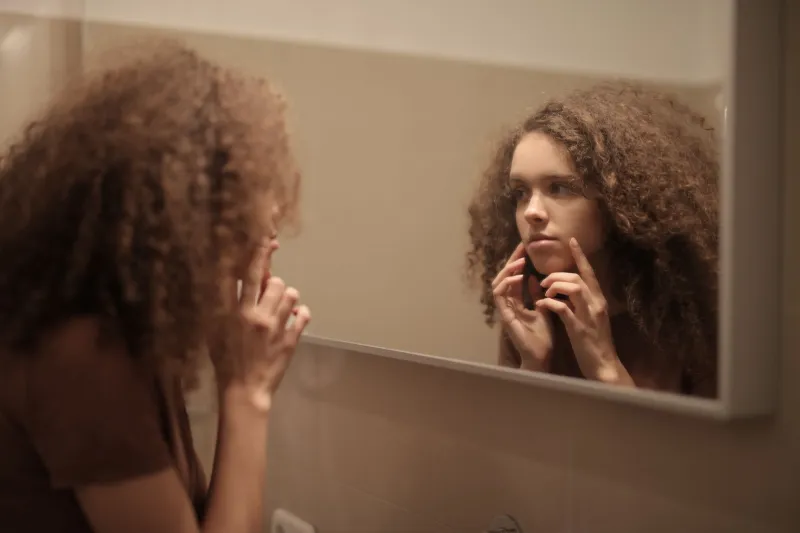
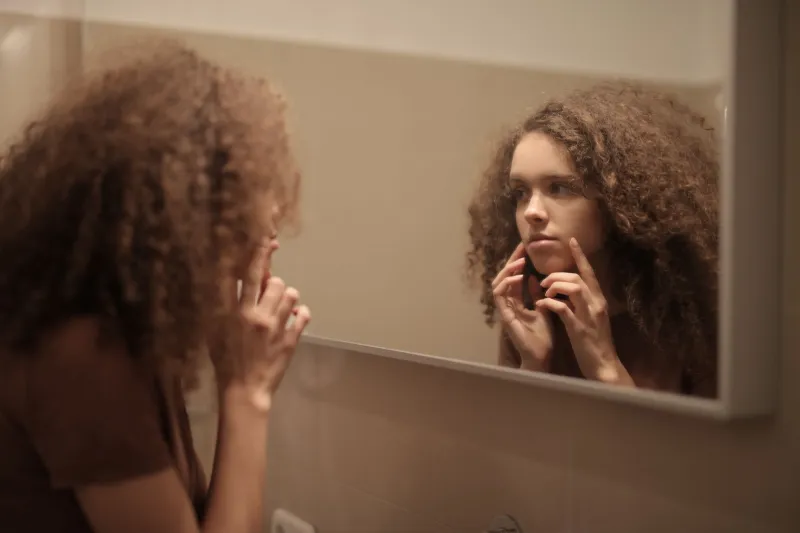
It's been about six months since you committed to your new routine — the one with the proper deep conditioning, the gentler wash days, the actual protective styling. You're doing everything right. And yet, when you look in the mirror, your hair still doesn't look like what you were promised. The ends are still rough. The curl pattern is still inconsistent. Something still feels off.
Here's what nobody tells you when you start a hair journey: your hair is not living in the present. It is, in the most literal biological sense, a living record of everything that has ever happened to it. And the strands currently sitting on your head are still carrying the story of who you were twelve, eighteen, even twenty-four months ago.
That's not discouraging. Once you understand it, it's actually one of the most clarifying things you can know about your hair.
Hair Is a Timeline, Not a Snapshot
Here's the biology, and it's genuinely fascinating once it clicks.
Each strand of hair grows approximately half an inch per month. That means a twelve-inch strand of hair has been growing for roughly two years. Every inch of that strand corresponds to about two months of your life — your stress levels, your nutrition, your product choices, your styling habits, your water quality, all of it embedded in the physical structure of the strand.
Damage doesn't announce itself immediately. A summer of heavy heat styling in June won't visibly manifest as breakage until those strands have traveled far enough down the shaft to be exposed to normal wear and tension — sometimes six months later, sometimes longer. By the time you're seeing the problem, the cause is ancient history.
This is why your new routine might be working perfectly at the root — producing healthy, well-moisturized new growth — while the mid-lengths and ends still look and feel like they belong to a different person. They kind of do. They belong to a version of you that was doing things differently.
The Buildup Problem Nobody Talks About Enough
Product buildup is one of the most underestimated contributors to this memory effect, and it operates on a longer timeline than most people realize.
Here's what happens: layers of silicone, heavy oils, and wax-based products accumulate on the hair shaft over months. They don't just sit there passively — they interfere with how moisture enters and exits the strand, how products bond to the hair, and how the cuticle behaves. When you switch to a new routine, all of that old residue is still present. Your new products are essentially trying to work through a filter made of everything you used to use.
Many people interpret this as their new routine failing. It's not. It's the old routine refusing to let go.
This is exactly why a thorough clarifying wash — not just a regular shampoo, but an actual clarifying treatment — is so often the missing first step in a hair transformation. You can't build a new foundation on top of an old one. The old one has to come out first.
What Permanent Damage Actually Looks Like (vs. What's Recoverable)
This is the part that matters most, and it requires some honesty.
Not all hair history is recoverable. Chemical damage — particularly from overlapping relaxer applications, bleach used without proper care, or repeated aggressive coloring — can permanently alter the disulfide bonds in the hair's cortex. These bonds are the structural backbone of your strand, and once they're significantly disrupted, no amount of conditioning or protein treatment is going to rebuild them. That hair will always be more fragile, more porous, and more susceptible to breakage than virgin hair. The goal becomes managing it well rather than reversing it.
But here's the good news: most of what people interpret as permanent damage is actually temporary setback. Hygral fatigue, protein overload, moisture imbalance, heat fatigue from occasional use, mechanical damage from rough detangling — all of these affect how hair looks and behaves, but none of them alter the hair's fundamental structure permanently. They're chapters in the story, not the ending.
The way to tell the difference: does the hair respond to treatment? Does a protein treatment improve elasticity? Does deep conditioning restore softness, even temporarily? If your hair responds — even a little — to the right intervention, you're looking at a temporary condition, not a permanent one. If nothing moves the needle no matter what you try, you may be working with structurally compromised strands that are simply waiting to be grown out.
The Six-Month Illusion
There's a specific frustration point that comes up constantly in hair communities, and it usually sounds something like this: I've been consistent for six months and I still don't see a difference.
Here's what six months actually means in strand terms.
If you have twelve inches of hair and you started your new routine six months ago, roughly the bottom six inches of your hair predates your new routine entirely. Those inches were formed under your old habits, your old products, your old water, your old stress levels. They are not going to look like the new growth, no matter how well you care for them now. The best you can do for those inches is maintain them gently while waiting for the new, properly nurtured growth to catch up.
Real, visible transformation — the kind where your whole head looks cohesive and reflects your current routine — takes as long as it takes to grow out the old strands. For most people, that's somewhere between one and three years, depending on length goals and growth rate.
This is not a failure of your routine. This is just biology.
Keeping a Strand Diary Changes Everything
One of the most practical things you can do — and one of the least glamorous — is start documenting your hair with the same consistency you document your routine.
Photographs every four to six weeks. Same lighting, same section of hair, same amount of product. Note what you changed, what you stopped using, what started or stopped happening with your health, your stress, your diet. Track it like data, because that's what it is.
The reason this matters: hair progress is almost impossible to perceive in real time. The changes are too gradual, too incremental. But when you compare a photo from today to one from eight months ago, you'll often see things you never noticed while they were happening — new growth that's a completely different texture, ends that have slowly improved, a curl pattern that's been quietly reorganizing itself.
Your strands are writing a story. It's just that the story is told slowly, one half-inch at a time.
Give Your Hair the Credit It's Earning
If you're in the middle of a hair journey and feeling like nothing is working, the most useful thing you can ask yourself isn't what am I doing wrong — it's how old is the hair I'm looking at, and what was I doing when it was formed?
The roots are responding to who you are now. The ends are still reflecting who you were. The goal isn't to make them identical overnight. The goal is to keep showing up for the new growth, protect the old growth as best you can, and trust that eventually, the whole story your hair is telling will be one you actually wrote on purpose.