Winter Stripped Your Hair Bare — And the Fix Is Probably Sitting in Your Pantry Right Now
Every November, the same thing happens. You wake up, touch your hair, and it feels like you've been running your hands through a bundle of dried wheat. Static clings to everything. Your scalp itches in that deep, under-the-surface way that no amount of scratching fixes. Your ends snap instead of bend. And somehow, the routine that had your hair thriving in July is now actively betraying you.
So you buy more product. Usually something heavier. Sometimes something shinier. And the cycle continues.
Here's the thing nobody's saying loudly enough: winter doesn't just change the amount of moisture your hair needs — it changes the kind. And if you're still reaching for the same ingredients that worked when it was 85 degrees and humid, you're essentially trying to run a diesel engine on regular gas.
Why Cold Air Is a Different Kind of Problem
In summer, humidity is your hair's background hydration system. Even if your routine isn't perfect, ambient moisture in the air helps keep the cuticle slightly swollen and flexible. Walk outside in August and the air is doing some of the work for you.
In winter, that's gone. Completely. Outdoor air gets cold and dry, and indoor heating makes it worse — forced-air heating systems can drop indoor humidity to levels that rival desert climates. Your hair is now living in an environment that is actively pulling water out of the shaft through a process called hygroscopic moisture loss. The strand gives up its water to the surrounding air because the air is thirstier than the hair is.
This is why your usual humectant-heavy products — the ones loaded with glycerin, aloe vera, and hyaluronic acid — can actually increase your problems in winter. Humectants are designed to draw moisture from the environment. When there's no moisture in the environment to draw from, they pull from the only source available: your hair itself. In dry winter conditions, glycerin can leave hair more brittle and more prone to static, not less.
This isn't a brand problem or a budget problem. It's a chemistry problem.
The Ingredient Most People Skip — And Probably Already Have
Olive oil gets talked about so casually that most people have stopped taking it seriously as a hair ingredient. That's a mistake.
What makes olive oil genuinely useful in winter — more so than in warmer months — is its squalene content. Squalene is a lipid that occurs naturally in your scalp's sebum. It's one of the primary components of the oil your body produces to protect hair and keep the scalp barrier intact. In winter, sebum production often slows slightly (partly due to the stress response triggered by cold, partly due to dehydration), and the scalp's protective barrier thins.
Olive oil's squalene mimics that natural protection. It doesn't just sit on top of the hair shaft — it can partially integrate with the lipid layers of the cuticle, which is why it feels different from, say, coconut oil. It seals without the heavy coating. For the scalp specifically, a light pre-wash treatment with olive oil can help restore that barrier before you strip it with shampoo.
You don't need a lot. A teaspoon warmed between your palms, worked through the mid-lengths and ends 20 to 30 minutes before washing, is enough.
What Your Summer Hero Might Be Doing to You in December
Coconut oil is the hair world's most beloved ingredient — and in summer, that reputation is mostly earned. Its molecular structure is small enough to penetrate the cortex, it reduces protein loss during washing, and it smells incredible. Easy win.
But coconut oil is high in lauric acid, which is a saturated fat that becomes significantly stiffer in cold temperatures. On your hair, this translates to a coating that can make strands feel stiff and actually impede flexibility rather than support it. If you've noticed your hair feeling waxy or oddly resistant in winter even after you wash, coconut oil buildup in cold conditions might be the culprit.
Swapping to avocado oil or marula oil in the colder months gives you the penetrating benefits without the stiffening effect. Both are high in oleic acid, which stays fluid at lower temperatures and is more compatible with winter-stressed hair. Marula oil in particular has gotten serious attention from dermatologists for its antioxidant profile, which helps combat the oxidative stress that dry, cold air puts on the scalp.
The Scalp Side of the Equation
Winter scalp issues and winter hair issues are usually talked about separately, but they're the same problem wearing different clothes. A dehydrated scalp can't produce a healthy sebum coating, which means the hair that grows from it starts its life already compromised.
If your scalp is flaking in winter, the instinct is often to use a clarifying or anti-dandruff shampoo more frequently. This is usually the wrong call. Most winter flaking isn't fungal dandruff — it's xerosis, which is just clinical-speak for skin that's too dry. Treating dry skin with more stripping is like treating a sunburn with more sun.
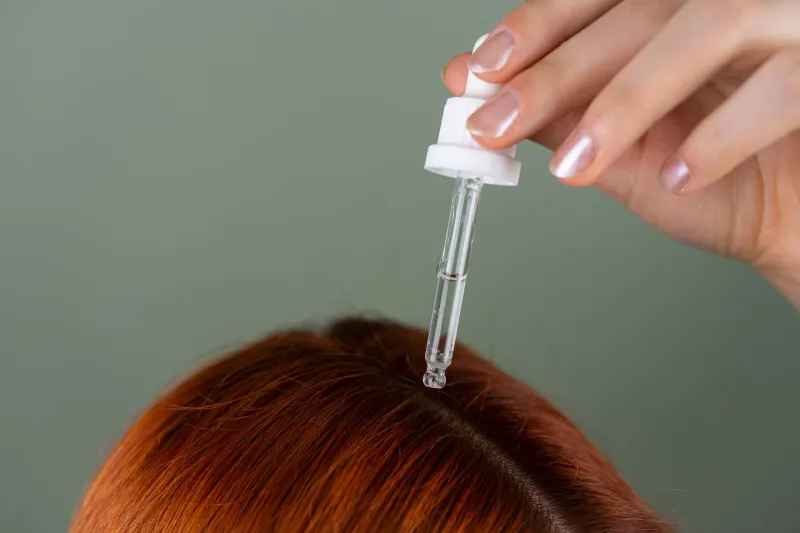
What actually helps: a scalp-specific oil massage two to three times a week using something like jojoba oil (which is technically a wax ester and the closest match to human sebum of any plant-derived ingredient), paired with a gentler wash cycle. Let the scalp breathe and rebuild its barrier instead of constantly resetting it.
The Pantry Audit You Didn't Know You Needed
Before you go spend $60 on a winter hair treatment, take a look at what's already in your kitchen. Olive oil, avocado oil, even plain honey — which is a natural humectant that works differently than glycerin because it also contains trace minerals and has mild antimicrobial properties — are genuinely effective at addressing winter-specific hair stress.
Honey used sparingly as a pre-wash treatment (diluted with water so it's easier to distribute) can add a soft, flexible kind of moisture that doesn't leave hair feeling coated. It's not a miracle, but it's a real tool.
The bigger shift here is seasonal thinking. Your skin routine changes with the weather. Your wardrobe changes. Your diet probably shifts toward warmer, heavier foods without you even consciously deciding to. Your hair routine should do the same thing — not because some brand told you to buy a winter collection, but because your hair is genuinely operating in a different environment.
The ingredients your hair craves in winter are ones that seal, protect, and mimic the body's own oils rather than ones that reach outward for moisture that isn't there. Start there, and you might find that the solution was never on a shelf at all.