Summer Air Is Not Your Hair's Friend — Unless You Know This
Every summer, the same thing happens. You spend twenty minutes on your hair, step outside, and by the time you hit the parking lot it's already doing something completely different from what you intended. Frizz, limpness, poof, crunch — pick your villain. And every year, the internet offers the same tired fix: just use an anti-frizz spray.
Here's the thing. That advice is basically like telling someone with a broken leg to take a Tylenol. It addresses the symptom without touching the actual problem. Humidity interacts with your hair at a structural level, and the way it does that depends almost entirely on your hair's porosity and texture. Until you understand your specific response to moisture-saturated air, you're just guessing.
Let's stop guessing.
What Humidity Is Actually Doing Inside Your Strand
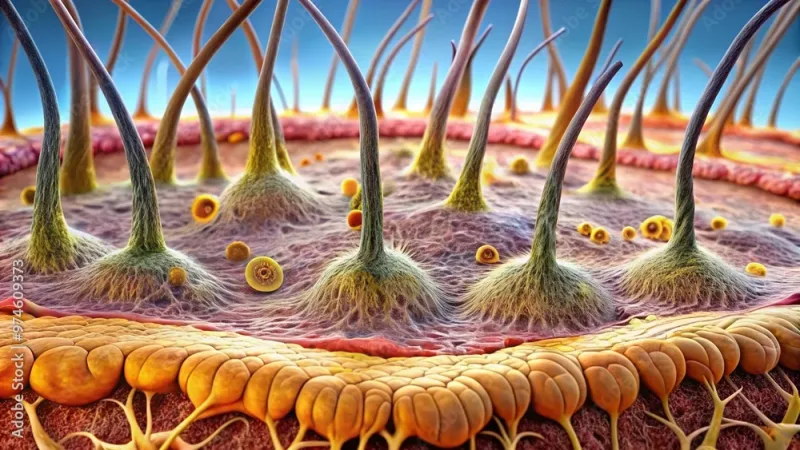
Hair is made of keratin proteins arranged in a cortex, surrounded by a cuticle layer — think of it like roof shingles overlapping each other. When the air is dry, those shingles lie relatively flat. When humidity spikes, water vapor gets pulled into the hair shaft (or tries to), and that's where things get complicated.
The hydrogen bonds inside your hair — the ones responsible for your hair's shape — are incredibly sensitive to water. High humidity introduces moisture that temporarily breaks and reforms those bonds in random, chaotic ways. The result? Your blowout drops, your curl pattern swells, your style loses definition. This process is called hygral swelling, and it's happening whether you can see it or not.
But here's what the generic advice skips: not all hair swells the same way. Porosity is the deciding factor.
Low-Porosity Hair in Humidity: The Pressure Cooker Effect
If you have low-porosity hair — meaning your cuticles are tightly packed and resistant to letting moisture in or out — you might think humidity is less of a problem for you. And in some ways, you'd be right. Water vapor has a harder time penetrating your shaft, so you won't absorb excess moisture as quickly.
But the flip side? Whatever moisture is already sitting on top of your hair has nowhere to go. Low-porosity hair in humid conditions can end up with product buildup that feels sticky, weighted-down curls that lose their spring, and a kind of dull, coated look that no amount of shine serum fixes.
For low-porosity hair in summer:
- Go lighter on products. Heavy butters and thick creams are already a challenge for low-po hair — in humidity, they become a problem. Swap to water-based leave-ins and lightweight gels.
- Use humectants strategically. Glycerin and honey attract water from the air, which sounds great until the air has too much water. In high-humidity environments, humectants can pull excess moisture into your hair and cause swelling. If you live somewhere like Houston or Miami in July, reconsider how much glycerin is in your routine.
- Heat styling with intention. A hooded dryer or diffuser fully dries your hair before you leave the house. Leaving any moisture in low-porosity hair before stepping into humidity is asking for trouble.
High-Porosity Hair in Humidity: The Sponge Problem
High-porosity hair — whether from chemical processing, heat damage, or just genetics — has cuticles that are raised or compromised. This hair absorbs everything fast and loses it just as quickly. In a humid environment, high-porosity hair is essentially a sponge dropped into a puddle. It pulls in atmospheric moisture rapidly, and that causes swelling, frizz, and lost definition almost immediately.
If this is you, the goal isn't to block humidity entirely (you can't). The goal is to fill your hair's gaps before the air does.
- Protein treatments are your summer best friend. Hydrolyzed proteins — keratin, wheat, silk — temporarily patch those open cuticle gaps, giving moisture less room to flood in chaotically. A light protein treatment every two to three weeks during summer can make a noticeable difference.
- Seal with purpose. After your leave-in, use an oil or butter to create a barrier. Castor oil, avocado oil, and shea butter are all heavier sealants that can slow down moisture absorption. You're not waterproofing your hair — you're buying yourself time.
- Layer in the right order. LOC (Liquid, Oil, Cream) or LCO (Liquid, Cream, Oil) methods aren't just curly girl trends — they're physics. Each layer creates a seal over the last, slowing moisture exchange with the environment.
Fine Waves and Straight Hair: It's Not Just a Frizz Problem
People with fine, wavy, or straight hair often feel left out of the humidity conversation because the narrative centers on curls. But if your hair goes flat, stringy, or greasy-looking the second you step outside in July, humidity is absolutely the culprit.
Fine hair has less structural mass to resist hygral swelling, so it can go limp or separate into weird clumps. Straight hair with any chemical processing is more porous than it looks, meaning it's absorbing humidity and reacting to it — you just see it as frizz along the hairline or a texture that looks "off."
For this hair type in summer:
- Volume-building products with polymers (like certain mousses and light-hold sprays) create a coating that resists moisture penetration without heaviness.
- Dry shampoo strategically. Humidity plus scalp oil is a recipe for that greasy-flat look by noon. A light application of dry shampoo at the roots before you go out — not after — creates a barrier.
- Skip the heavy conditioner in summer. If your mid-lengths and ends don't actually need deep moisture, a lighter rinse-out conditioner keeps fine hair from going limp faster.
The Real Summer Strategy: Stop Fighting, Start Predicting
The shift that actually changes your summer hair experience isn't finding the one magic product. It's understanding that humidity is a condition you can prepare for, not a force that's randomly punishing you.
Check the dew point, not just the humidity percentage — dew points above 60°F are when most hair types start to struggle. Know your porosity so you know whether you're fighting absorption or evaporation. And build your summer routine around what your specific hair structure actually needs, not what worked for someone with a completely different texture on TikTok.
Your hair isn't broken. It's just responding to its environment the way it's supposed to. Give it the right tools for the season, and summer stops being a hair emergency.