Your Scalp Is Talking — Are You Actually Listening?
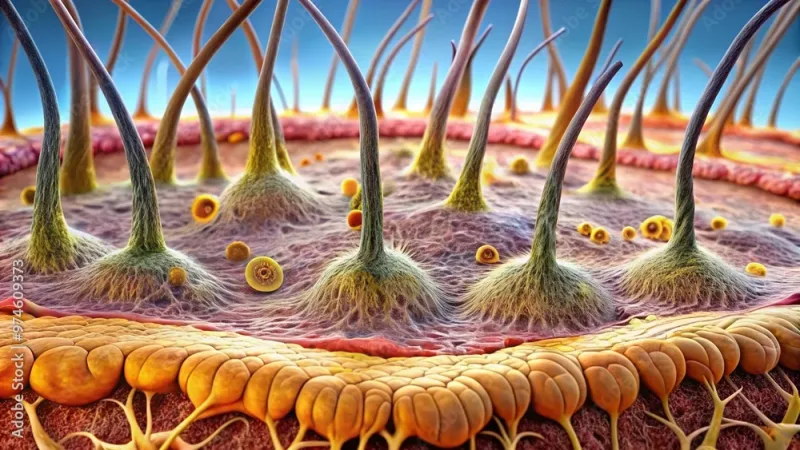
Photo: close-up scalp health hair follicles science illustration woman, via as2.ftcdn.net
Let's be honest: most of us treat our scalp like an afterthought. We obsess over our ends, our curl pattern, our shine — and then we dump a handful of shampoo on top of our heads and call it scalp care. But here's the thing: your scalp is literally the soil your hair grows from. And if the soil is off, no amount of expensive product is going to save your harvest.
At Hair & Care, we're big believers that your crown deserves more than surface-level attention. So let's get into the actual biology behind scalp health — because once you understand what's happening underneath, everything else starts to make a lot more sense.
The pH Factor: It's Not Just for Chemistry Class
Your scalp has a natural pH level that sits somewhere between 4.5 and 5.5 — slightly acidic, and for very good reason. That acidity is your scalp's first line of defense. It keeps the outer layer of your skin (called the acid mantle) sealed tight, locks in moisture, and creates an environment where the good microorganisms on your scalp can thrive while the harmful ones struggle to take hold.
The problem? A ton of popular hair products — especially sulfate-heavy shampoos and clarifying treatments — can swing your scalp's pH toward the alkaline side. When that happens, the cuticle of your hair shaft opens up, your scalp gets irritated, and suddenly you're dealing with dryness, breakage, or that relentless itch you can't explain.
If you've been cycling through products wondering why nothing works, your pH balance might be the culprit nobody told you to check. Look for shampoos and scalp treatments that are labeled pH-balanced, or even mildly acidic. Apple cider vinegar rinses (diluted, please) have become a popular DIY option for a reason — they help nudge your scalp back toward that sweet acidic zone.
Sebum: The Misunderstood MVP
Here's a word that deserves a serious reputation rehab: sebum. We've been conditioned to think of scalp oil as the enemy — something to strip away as aggressively and as often as possible. But sebum is actually your scalp's natural moisturizer, produced by the sebaceous glands that sit right next to each hair follicle.
When sebum production is balanced, it travels down the hair shaft and gives your strands that natural luster and flexibility. It also acts as a protective barrier against environmental stressors like pollution and UV damage. The trouble starts when production goes haywire in either direction.
Too much sebum? You're dealing with oily roots, product buildup, and potentially clogged follicles that can slow hair growth. Too little? Hello, dry scalp, flakiness, and brittle strands that snap at the slightest tension. What throws sebum production off balance includes stress, hormonal shifts, diet, and — ironically — overwashing. Stripping your scalp too frequently can actually trigger it to overproduce oil as a compensatory response. Yeah, washing your hair every single day might be making your greasy roots worse.
Figuring out your scalp's sebum tendencies is just as crucial as knowing whether your hair is fine, coily, or somewhere in between.
The Microbiome: Your Scalp's Tiny Ecosystem
This is where it gets genuinely fascinating. Your scalp is home to an entire community of microorganisms — bacteria, fungi, and other microscopic life forms — that together form what scientists call the scalp microbiome. And before you recoil, know this: a balanced microbiome is a healthy microbiome.
One of the most well-known residents is Malassezia, a type of yeast that naturally lives on the scalp. In small, controlled amounts, it's totally harmless. But when the scalp environment gets disrupted — through product overuse, dietary changes, stress, or hormonal fluctuations — Malassezia can overgrow and trigger dandruff, seborrheic dermatitis, or persistent scalp inflammation.
Research into the scalp microbiome is still relatively young, but what scientists already know is significant: diversity matters. A scalp with a rich, varied microbial community is generally more resilient and better at self-regulating. Harsh antimicrobial shampoos and over-cleansing can wipe out that diversity, leaving your scalp more vulnerable — not less.
This is part of why probiotic scalp treatments and microbiome-friendly formulas have been gaining traction in the professional hair care world. They're not just a trend; they're rooted in real science.
Inflammation: The Silent Hair Thief
Chronic scalp inflammation is one of the most underdiagnosed reasons people experience hair thinning and shedding — and it's sneaky because it doesn't always look or feel dramatic. You might notice a subtle tenderness when you touch your scalp, persistent redness around the hairline, or hair that seems to shed more than it used to without any obvious cause.
Inflammation can be triggered by a long list of culprits: tight hairstyles worn too frequently, heat damage, certain synthetic ingredients in products (fragrance and alcohol are common offenders), and even your diet. Diets high in processed foods and sugar have been linked to systemic inflammation that can absolutely show up on your scalp.
The good news is that addressing inflammation doesn't always require a dermatologist visit (though if your symptoms are persistent or severe, absolutely go see one). Incorporating anti-inflammatory ingredients like tea tree oil, salicylic acid, zinc pyrithione, and niacinamide into your scalp routine can make a real difference over time.
How to Actually Get to Know Your Scalp
Knowing your scalp type isn't as complicated as it sounds, but it does require a little honest observation. Try this: wash your hair with a gentle, sulfate-free shampoo, skip the conditioner on your roots, and then check in with your scalp after 24 hours without adding any products.
- Oily scalp: Roots look greasy or flat, scalp feels slick to the touch
- Dry scalp: Tightness, flaking, or itchiness, especially after washing
- Balanced scalp: Roots look relatively fresh, no major irritation
- Sensitive/reactive scalp: Redness, itching, or burning in response to products
- Combination scalp: Oily at the crown but dry or flaky at the hairline or nape
Once you know what you're working with, you can actually shop with intention instead of just hoping something works.
Building From the Ground Up
Your hair products aren't going anywhere — we love a good serum or a deeply hydrating mask as much as anyone. But treating your scalp as the foundation of your entire hair health strategy? That's the real upgrade.
Start simple: a gentle cleanser that respects your pH, a scalp massage a few times a week to stimulate circulation, and a genuine commitment to listening to what your scalp is telling you instead of just covering up the symptoms.
Your crown is worth the investment — and it starts way before the bottle ever touches your hair.