The Shelf Tax: How to Stop Paying for Products Your Hair Architecture Will Never Accept
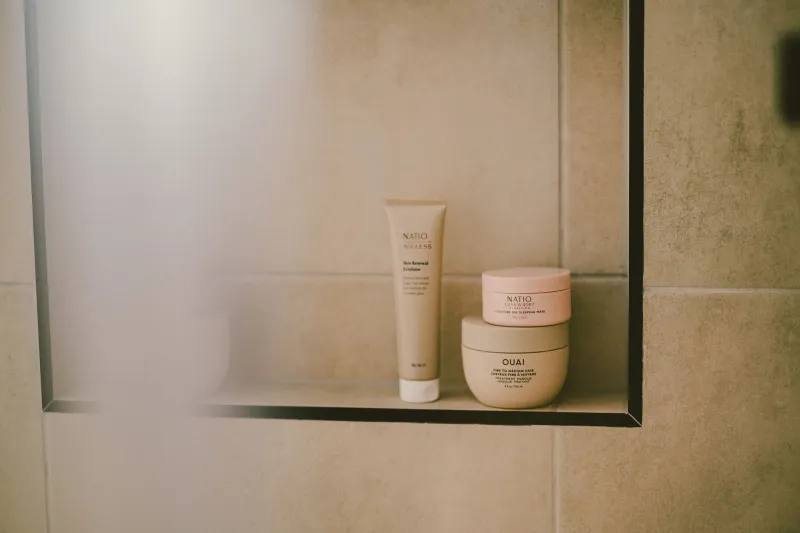
There's a particular kind of beauty budget grief that hits when you're standing in your bathroom, staring at a collection of half-used products that cost you real money and delivered approximately nothing. The conditioner that smelled incredible but left your hair feeling like straw. The oil that every influencer swore by but made your scalp look like a frying pan by noon. The curl cream that gave your friend's hair definition for days and gave yours a crunchy helmet.
You probably blamed yourself. Or the product. Or the humidity. But here's what actually happened: your hair's architecture rejected the formula before it ever had a chance.
Hair isn't a uniform surface. It's a biological structure with specific physical properties that determine what can penetrate it, what sits on top, what gets absorbed, and what gets repelled. When those properties don't match the formulation you're applying, the product doesn't work — not because it's bad, but because it was never designed for your specific setup. And no amount of price tag justifies a mismatch.
What "Hair Architecture" Actually Means
Think of your hair system as having three key structural specs that govern product compatibility:
1. Strand thickness — the physical diameter of each individual hair fiber. Fine strands have a small surface area and can't support heavy product loads. Coarse strands have a larger surface area and often need more substantial formulations to coat them effectively. Medium strands are the flexible middle ground.
2. Scalp oil production rate — how quickly your sebaceous glands produce and release sebum. This isn't just about how often you need to wash. It directly affects which products will layer successfully on your hair versus which ones will create buildup, greasiness, or scalp congestion within hours.
3. Moisture retention capacity — determined largely by your hair's porosity, this is how long your hair can hold water-based moisture before it evaporates or escapes. Low-retention hair needs sealants and occlusive ingredients to lock moisture in. High-retention hair can handle lighter leave-ins without needing a heavy seal.
When these three specs align with a product's formulation, you get results. When they don't, you get shelf inventory.
The Strand Thickness Trap
Fine hair is the most commonly over-loaded hair type in America. Not because people with fine hair are making bad choices — but because the beauty industry skews heavily toward products designed for medium to coarse textures. Rich creams, heavy butters, thick oils — these are the products with the most dramatic visual appeal, the most satisfying texture in your hand, and the most enthusiastic reviews. They also suffocate fine strands.
Fine hair has a small medulla (the innermost layer of the strand) or sometimes none at all. The cortex — the middle layer where moisture lives — is relatively narrow. Heavy products can't penetrate this structure effectively, so they sit on the cuticle and weigh the strand down. The result is flat, greasy-looking hair that loses volume and movement fast.
If your hair is fine, your product architecture should prioritize lightweight humectants (like glycerin, aloe vera, or panthenol) over heavy emollients. Water-based leave-ins over creams. Lightweight oils like argan or grapeseed over shea butter or castor oil.
Coarse strands operate on the opposite principle. A thick, densely packed cortex can handle — and often needs — richer, heavier formulations to penetrate the cuticle layer and deliver moisture to the interior. Lightweight products often evaporate or dissipate before they do meaningful work on coarse hair.
Scalp Oil Production: The Forgotten Compatibility Factor
Most product guides tell you to choose formulas based on your hair type. Almost none of them tell you to factor in your scalp's sebum production rate — which is wild, because your scalp is the source of your hair's natural conditioning system.
If your scalp produces sebum quickly and abundantly, adding heavy oils or butter-based products to your lengths is essentially doubling down on an already-oily situation. Your hair will look greasy faster, buildup will accumulate on your scalp, and you'll need to wash more frequently — which can strip the scalp and trigger even more oil production. It's a cycle.
If your scalp is naturally dry and slow to produce sebum, your lengths are getting very little natural conditioning. You need products that compensate: richer leave-ins, regular oiling, and protective styles that minimize moisture loss.
A quick way to assess your production rate: how does your scalp feel 48 hours after washing, with no product applied to the roots? Visibly oily or greasy = high production. Tight, itchy, or flaky = low production. Comfortable and balanced = moderate.
The Moisture Retention Diagnostic
Here's a practical tool to figure out your hair's actual moisture retention capacity — and match it to the right product types:
Test: Wash and condition your hair as normal. Apply only a water-based leave-in conditioner (no oil, no cream on top). Air dry. Then check your hair at the 24-hour mark, the 48-hour mark, and the 72-hour mark.
- Hair feels dry and rough by 24 hours: High porosity, low moisture retention. You need a layering system — humectant, then cream or butter, then a sealing oil. The LOC or LCO method exists for exactly this reason.
- Hair still feels soft and moisturized at 48 hours: Moderate porosity, moderate retention. A simple leave-in plus a light oil is probably sufficient.
- Hair feels fine at 72 hours: Low porosity with good retention. You may actually be over-moisturizing if you're applying heavy products frequently. Stick to lightweight, water-based formulas and apply them sparingly.
Ingredients That Work — And Ones That Just Sound Like They Do
Not all ingredients are created equal for every architecture. A few worth knowing:
Glycerin — a humectant that draws moisture from the air into the hair. Works beautifully in humid climates. In very dry environments, it can pull moisture out of the strand instead. Climate matters.
Coconut oil — penetrates the hair shaft better than most oils due to its small molecular size. Excellent for coarse, high-porosity hair. Can cause protein sensitivity reactions in some people, leading to stiffness or brittleness.
Mineral oil and petrolatum — heavily debated, but genuinely useful as sealants for high-porosity hair. They don't penetrate — they coat. That's a feature, not a bug, when your goal is locking moisture in.
Silicones — effective at smoothing the cuticle and adding shine, but require sulfate-based cleansing to fully remove. If you're sulfate-free, silicone buildup can block moisture absorption over time.
Building a Shelf That Works for You, Not Against You
Before your next purchase, run through these three questions:
- What is my strand thickness, and can this product's weight work with that structure?
- What is my scalp's oil production rate, and will this product compound or balance it?
- What is my moisture retention capacity, and does this product's function (humectant, emollient, sealant) match what my hair actually needs?
If the product doesn't align with at least two of those three specs, put it back. It doesn't matter if it's $8 or $80, if it went viral or if your favorite creator swears by it. Your hair's architecture is non-negotiable — and it's the only spec sheet that actually matters.
The goal isn't a full shelf. It's a shelf where everything earns its place.