'Good Hair' Is Still a Job Interview Question — America Just Stopped Saying It Out Loud
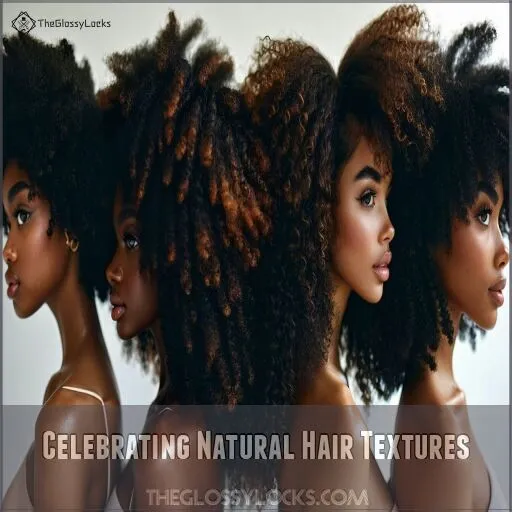
Photo: diverse natural hairstyles portraits celebration textured hair, via theglossylocks.com
Nobody asks about your hair in a job interview anymore. They just notice it. They make a mental note. And whether that note works for you or against you depends less on how healthy your hair is than on how closely it hews to a standard that was never designed with you in mind.
That's the quiet truth underneath America's hair politics. We've retired the explicit language of "good hair" — the phrase itself, with its painful history rooted in slavery and colorism, sounds archaic now. But the hierarchy it described didn't retire. It just learned to speak in euphemisms: professional, polished, neat, appropriate.
The Law Finally Caught Up — Slowly
In 2019, California became the first state to pass the CROWN Act, short for "Create a Respectful and Open World for Natural Hair." The law made it illegal to discriminate against someone in employment or education based on hair texture or protective styles — braids, locs, twists, Bantu knots, the styles that Black Americans have worn for generations and been penalized for wearing in classrooms and conference rooms alike.
Since then, more than twenty states have followed, and versions of the CROWN Act have been introduced in Congress — where, tellingly, it has repeatedly stalled. Federal protection still doesn't exist. Which means in a meaningful chunk of this country, your natural hair can legally cost you a job, a promotion, or a seat in a classroom.
Think about that. A hairstyle. A protective style, often, meaning one worn specifically to keep natural hair healthy. And the penalty is economic.
The Cost of Conforming
The financial side of this gets less attention than the legal side, and it shouldn't. Studies on hair discrimination have found that Black women are far more likely to change their hairstyles for interviews, and that natural styles are rated as less professional than straightened ones. Meanwhile, the cost of maintaining that conformity — relaxers, salon straightening, the time and heat damage involved — is a private tax paid to meet a public standard.
It runs through every community, too. Grooming codes have policed long hair on men, required women to "manage" curls into submission, and treated anything outside a narrow window of straightness, sleekness, and whiteness as a problem to solve. Hair has always been one of the last acceptable proxies — a way to judge someone's background, class, or commitment to conformity while pretending you're just noticing their "presentation."
The Natural Hair Movement Didn't Ask Permission
Here's the counterstory, and it's been building for two decades. The natural hair movement — accelerated by YouTube tutorials, Instagram community, and a generation that simply declined the relaxer — turned the hierarchy on its head. Coil definition became celebrated. Locs became a runway statement. Braids showed up on magazine covers instead of only in "before" photos.
The market noticed. The Black hair care industry alone is worth billions, and texture-specific lines, bond builders designed for curls, and brands founded by and for people with textured hair have moved from specialty shelves to mainstream aisles. This is progress. But it's also where the industry faces its next test.
Shelves Are a Statement
Every product assortment is an argument about whose hair matters. When a store's "hair care" section devotes two feet to textures that describe most of the population and twenty feet to everything else, that's not neutrality — that's a position. When marketing imagery shows one texture as the "before" and another as the "after," that's a position too.
We founded Hair & Care on a simple refusal: your crown, your rules. Not the workplace's rules. Not a 1998 beauty standard's rules. Yours. Practically, that means stocking for every texture as a baseline, not a specialty. It means showing 4C coils and fine straight hair and everything between as equally worth photographing. It means treating protective styles as hair care — which is literally what they are — rather than hair to be corrected.
What You Can Do With Your Wallet
Consumers have more leverage here than any single law. Buy from brands that show your texture in their campaigns, not just their press releases. Support retailers that stock the full range. And when a workplace or school policy polices hair, ask what, exactly, the hair is disrupting.
"Good hair" was always a fiction — a ranking system dressed up as an aesthetic. The only honest standard for hair is the one you set for it: healthy, yours, on your terms. The shelves, the laws, and the culture are slowly catching up to that idea. Some of us are done waiting.