You Sleep for Eight Hours — Your Hair Should Be Working That Shift Too
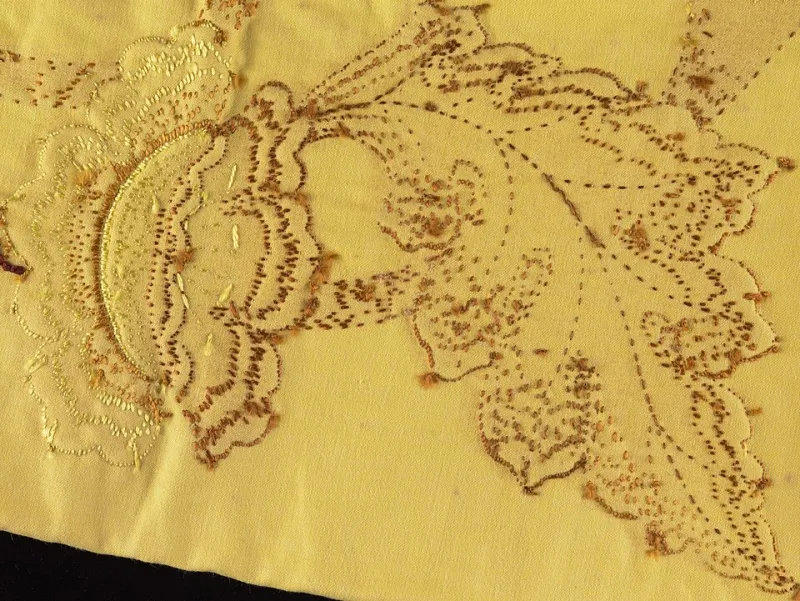
Photo: Unknown, Public domain, via Wikimedia Commons
Here's a number that should reframe your entire routine: if you sleep eight hours a night, you spend around 2,900 hours a year with your hair pressed against a pillow. No leave-in, no deep conditioner, no salon treatment gets that kind of contact time. And yet most of us treat bedtime as dead time for our hair — then wonder why mornings look like a lost battle.
The friction is real, and it's measurable. Cotton pillowcases create drag against the hair cuticle, and over thousands of repetitions a night, that drag roughs up the outer layer of each strand. The result is the classic morning evidence: frizz, flattened edges, breakage along the parts of your hair that rub the pillow most, and styles that collapse before your alarm.
Silk vs. Satin: The Actual Difference
Let's clear up the confusion, because the two terms get used interchangeably and they shouldn't be.
Silk is a fiber — the protein filament produced by silkworms. It's naturally smooth, breathable, and gentle on hair, but it's also expensive, delicate, and typically needs hand-washing.
Satin is a weave, not a material. Satin pillowcases are usually made of polyester or a blend, engineered to mimic silk's slippery surface at a fraction of the price. For hair purposes, the smoothness is what matters — and a good satin weave delivers it.
The practical takeaway: silk if you want the luxury and can maintain it, satin if you want the same friction reduction for twenty bucks and a machine-washable fabric. Your hair cannot tell the difference. Your bank account will.
The Overnight Checklist, By Hair Type
For coils and tight curls (3C–4C): Pineapple it. Gather your hair into a loose, high ponytail with a satin scrunchie so curls sit on top of your head rather than crushed beneath it. Follow with a satin bonnet or scarf if you toss and turn.
For waves and loose curls (2A–3B): A loose braid or two keeps strands from tangling while preserving some wave pattern. Braid too tight and you'll create dents; the goal is "gently contained," not "secured for a storm."
For straight and fine hair: A low, loose bun at the nape of the neck with a soft tie keeps hair off your face and reduces the root-flattening that makes morning blowouts necessary.
For everyone: Detangle before bed. Sleeping on knotted hair doesn't just create more knots — the tension pulls at the follicle and snaps strands at their weakest points.
Don't Sleep on Your Scalp
Nighttime is also when your scalp does its maintenance work. Blood flow, sebum distribution, and the hair growth cycle all hum along while you're unconscious. A few adjustments help that process:
- Skip the tight styles. Chronic tension from tight ponytails and buns — even overnight ones — contributes to traction stress along the hairline.
- Sleep on your back when you can. Stomach sleepers press their hairline and edges directly into the pillow all night, which is why front hairlines often show frizz and breakage first.
- Keep the room from getting desert-dry. Winter heating and aggressive AC both pull moisture from strands overnight. A humidifier is a hair product you don't apply.
- Dry your hair before bed. Wet hair is at its most fragile — the hydrogen bonds that give strands strength soften when wet, so sleeping damp means sleeping vulnerable.
The Cheapest Treatment You'll Ever Own
Add it up: a satin pillowcase, a scrunchie, ninety seconds of detangling and styling before lights out. That's the entire investment. Compare it to the price of a single bond-building treatment, then consider that the pillowcase works every single night without being repurchased.
Eight hours is the most underused window in hair care. Your body's already showing up for the shift — give your hair the equipment to work it.